The Maker Movement in Education
The desire to create is a basic human impulse (Martinez & Stager, 2014). Within the educational setting, it is critical to allow an abundance of opportunities for students to build, explore and create using a range of digital and physical materials (Cohen e al., 2017; Martin, 2015). The Maker Movement is based upon the Constructionism Theory developed by Papert (1986) as bringing creativity, tinkering, exploring, building, and presenting to the forefront of the learning process (Donaldson, 2014). In addition, the constructivism theory supporting the concept of “knowledge is a consequence of experience” formed by Piaget, is an essential idea to the Maker Movement. It encourages students’ to think creatively through challenging problem-solving project-based tasks (Martinez & Stager, 2014).
Maker Movement in the classroom
Implementing Maker Movement into the classroom requires the teacher to develop a Makerspace. Makerspace is a designated area in the classroom that is easily accessible, inviting and open for all students to express their creativity (Martinez & Stager, 2014). It does not need to be equipped with all the newest technology however should contain a range of materials, digital and non-digital to encourage design and making (Cohen e al., 2017; Martinez & Stager, 2014). Some tools and materials appropriate for a Makerspace include:
- 3D Printer
- Robotics
- Computers – available for programming and digital designing
- Lego
- Craft Supplies
- Little Bits
- Bloxels
- Kinetic Sand


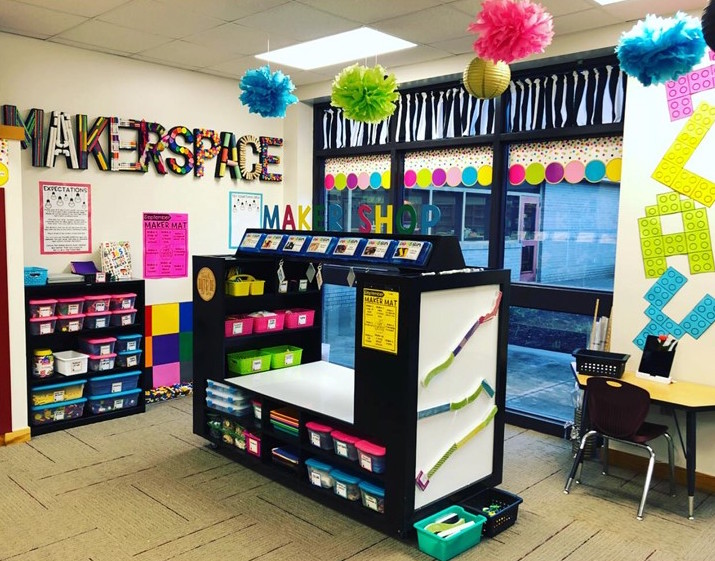
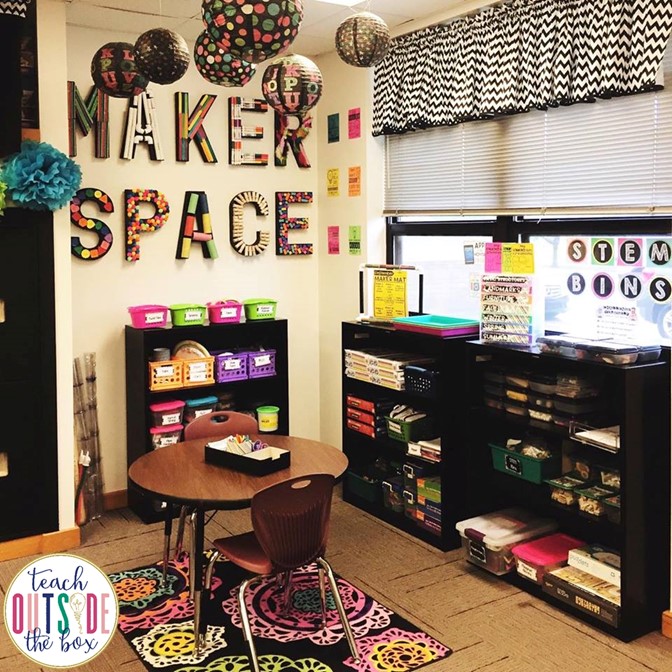
Examples of Teacher Makerspaces
Fostering Creativity
The Maker Movement is based around the concept that students’ should be regularly encouraged to express their creativity across a range of tools (Donaldson, 2014). It supports students’ of all ages to self-regulate through real-world problem solving, increasing their belief in themselves (Martin, 2015; Martinez & Stager, 2014). The Maker Movement in combination with a designated Makerspace is seen to increase students’ abilities particularly in STEM subjects, however, continues to shows beneficial results across other KLA’s (Donaldso, 2014; Martin, 2015). For example, the Maker Movement encourages students to foster creativity using 3D Printing in designing a character from their imaginative story developed in English or designing a historical artefact researched in History class. Bloxels is another creative technology, which can be used to design a game resembling the Kokoda Track used during World War II.
Pedagogical Implications
The Maker Movement has shown a considerable amount of positive results on students’ creativity, design processes and conceptual understanding through hands-on activities (Martin, 2015). However, for students’ to achieve these advantages, effective application strategies need to be employed by teachers. Cohen et al. (2017) express a two-pillar stage of the Maker Movement to accomplish an effective learning outcome: 1. Making, 2. Sharing. This is labelled the Makification Framework. Their research shows equal importance on making as learning through project and problem-based tasks and the connection to deliberate learning goals, directly linked to the existing curriculum (Cohen et al., 2017). Without the relationship of the curriculum, students’ would lack the understanding and value in Maker Movement tasks (Cohen et al., 2017; Donaldson, 2014).
References
Cohen, J., Jones, W. M., Smith, S., & Calandra, B. (2017). Makification: Towards a Framework for Leveraging the Maker Movement in Formal Education. Journal of Educational Multimedia and Hypermedia, 26(3), 217-229.
Donaldson, J. (2014). The Maker Movement and the rebirth of Constructionism. Hybrid Pedagogy. Available at: http://www.hybridpedagogy.com/journal/constructionism-reborn/
Martin, Lee. (2015). The Promise of the Maker Movement for Education. Journal of Pre-College Engineering Education Research, 5(1), 30-39.
Martinez, S., & Stager, G. (2014). The maker movement: A learning revolution. International Society for Technology in Education. Available at: https://www.iste.org/explore/articleDetail?articleid=106
Teacher Makerspaces
 EDUC362 Blog