Virtual Reality
Virtual Reality (VR) is a computer-generated 3D simulation of immersive environments. It can provide 360-degree experiences to portray seemingly real-world. VR systems have high levels of immersion, believability and interaction for the users (Minocha, 2015). VR is not a new concept; however, it has only recently become effective in education within the last decade (Kavanagh et al., 2017). Research shows VR in education can produce beneficial factors to students such as the increased enjoyment, motivation, higher order thinking, deeper learning and long-term retention (Blazauskas et al., 2017; Kavanagh et al., 2017).
VR can be explored in a range of devices including:
- Google Cardboard – creative, affordable VR to encourage creative thinking
- ClassVR – designed for education and training, curriculum aligned, teachers can develop their own VR experience for students
- Oculus Rift – Advanced VR gaming, useful for special education

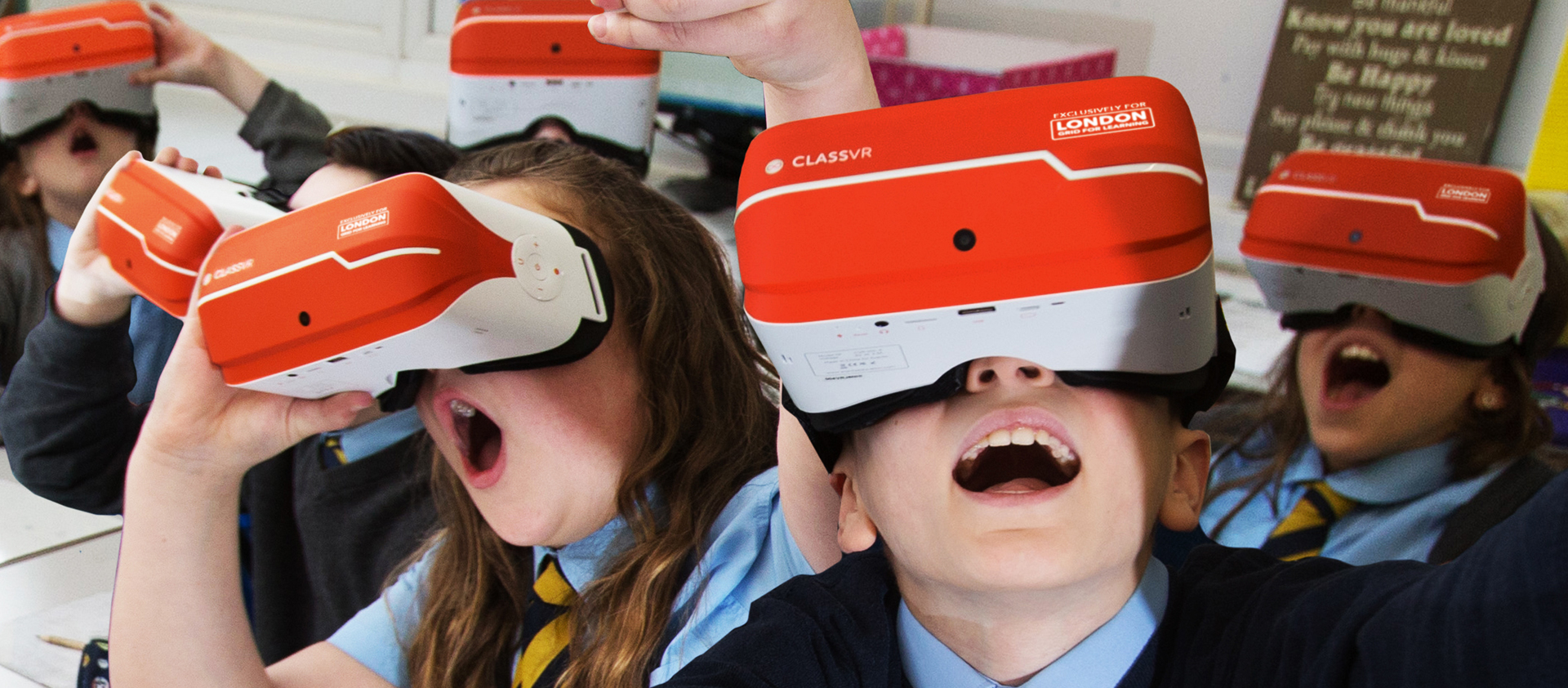

Virtual Reality in the classroom
VR allows the syllabus content to be delivered creatively. For example, abstract concepts in areas of Science such as space can be difficult for students to completely understand in terms of size, colour, shape, etc. (Minocha, 2015). VR can alleviate student misunderstanding; the VR experience constructs deep learning and retention of knowledge through the virtual interaction (Kavanagh et al., 2017). Alternative methods of implementing VR in the classroom can aid student understanding of historical culture, diverse geographical features, STEM concepts, as well as language formation, design and skill development through lessons such as virtual field trips.
Virtual Reality Fostering Creativity
Using VR in the classroom encourages students’ to foster creativity. Challenging their traditional form of learning, VR requires higher order thinking skills to be employed throughout the experience. Personalised learning is developed through VR as students have the opportunities to select various paths, advancing their decision-making skills. Peer learning is also a critical factor in developing an effective VR experience as their collaboration, discussion and problem-solving addresses creative thinking (Kavanagh et al., 2017; Minocha, 2015).
Pedagogical Implications
Despite the vast array of pedagogical benefits to VR in education, the associated costs, training and it is appropriate ‘fit for purpose’ require significant consideration before implementing in the classroom. VR is most effective when aligned with syllabus content and delivered in a planned and sophisticated manner (Minocha, 2015). Using a constructivism pedagogical approach with VR allows students to make meaning through the active, hands-on process to gain practical knowledge (Kavanagh et al., 2017; Minocha, 2015). Alternatively, Chandramouli et al. (2014) promote the use of scenario-based learning with VR to develop real-world skills. Although VR engages students through an immersive simulation experience, research suggests for it only to be utilised when traditional teaching methods are not sufficient enough as it can result in cognitive overload for students’ (Southgate, 2018).
References
Blazauskas, T., Maskeliunas, R., Bartkute, R., Kersiene, V., Jurkeviciute, I., & Dubosas, M. (2017). Virtual Reality in Education: New Ways to Learn. Communications in Computer and Information Science, 756, 457-465.
Chandramouli, M., Zahraee, M., & Winer, C. (2014). A fun-learning approach to programming: An adaptive Virtual Reality (VR) platform to teach programming to engineering students. IEEE International Conference on Electro/Information Technology, 581-586.
Kavanagh, S., Luxton-Reilly, A., Wuensche, B., & Plimmer, B. (2017). A Systematic Review of Virtual Reality in Education. Themes in Science and Technology Education, 10(2), 85-119.
Minocha, S. (2015). The State of Virtual Reality in Education –Shape of Things to Come. International Journal of Engineering Research, 4(11), 596-598.
Southgate, E. (2018). Immersive virtual reality, children and school education: A literature review for teachers. DICE Report Series Number 6. Newcastle: DICE Research. Retrieved from http://dice.newcastle.edu.au/DRS_6_2018.pdf
 EDUC362 Blog